<- Back
Comments (24)
- blindseekerUniversity professor here: showing and decoding wire signals has become a staple in my teaching - very effective, eye-opening even for students that find the OSI layers too abstract to grasp on paper. Btw, I’m using this nice demo board (I’m not affiliated with the brand): https://www.batronix.com/shop/demoboards/Batronix-MSO-Demo-B...…typically we decode I2C.Oh, I‘ve equipped the lab with all kinds of oscilloscopes. I find a lower mid-tier product (like Rigol DHO 900/1000 series) most suitable: good enough resolution and nice quality-of-life features (many physical buttons / dials and input channels go a long way!), yet not too feature-packed and physically compact to still be approachable.
- mjbrightThis reminds me of back in the day (1985) on my final year project, I'd designed a (6502 or 8080 based) SBC, my PCB design, my assembler and on first boot ... nothing happened.With only a voltmeter in hand, I measured the voltages on the address lines - thankfully my dumb programming error was a very tight loop so it was easy to deduce where the looping was happening !Some things were easier back in the day.
- jzer0coolCould anyone recommend a budget tooling (has most features desired, please explain) to capture on wire like an oscilloscope. Help understand what kind of sample rates needed etc. features desired, cost and any recommended brand/models to get by. Thx!
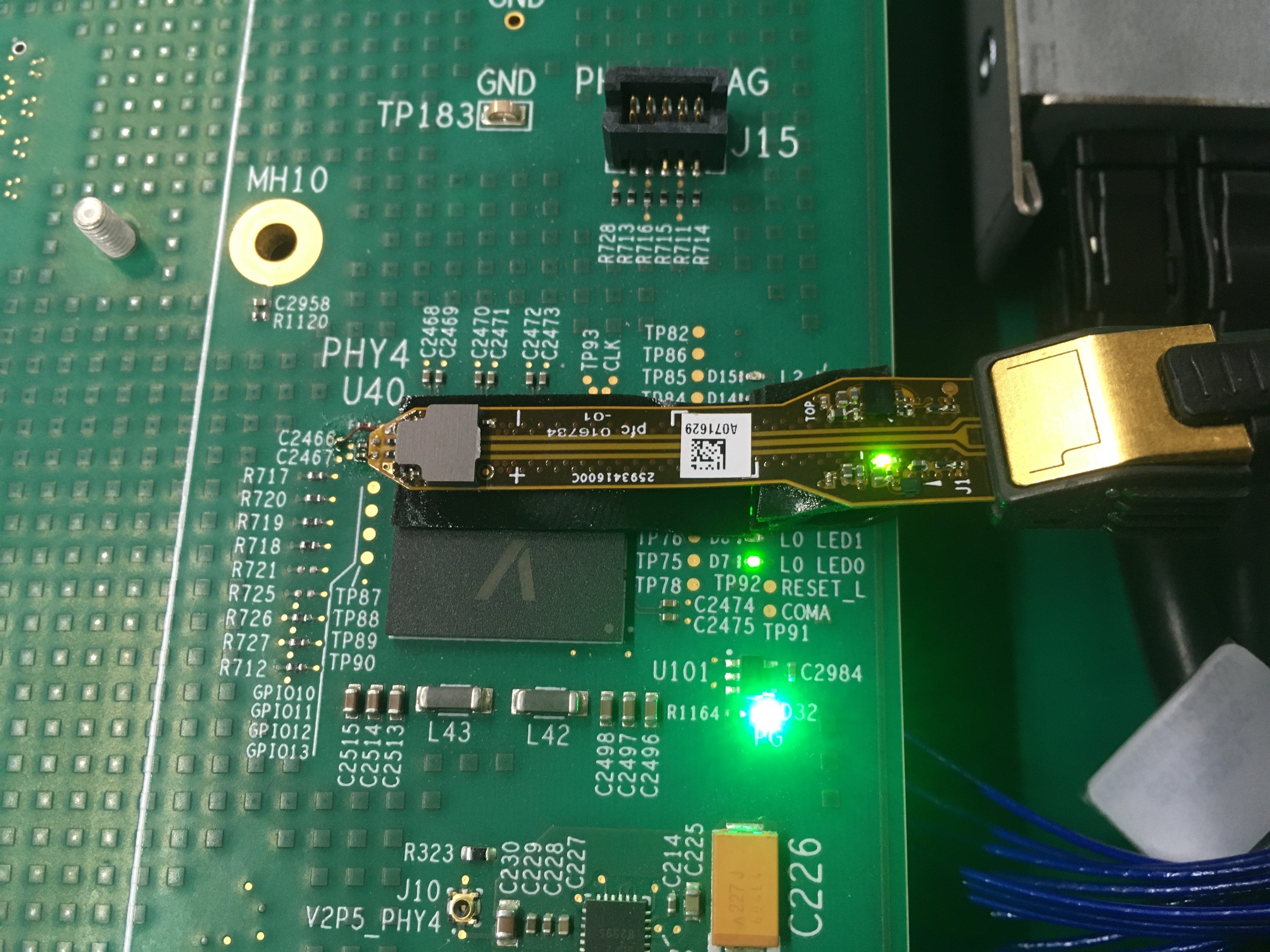
- CadwhiskerI love the photo of the probe, and I bet it's very expensive. I wonder if the "A071626" sticker changes the impedance of the traces enough for you to notice :)https://www.mattkeeter.com/blog/2022-08-11-udp/probes_full.j...
- Retr0id> I configured the oscilloscope to collect 100M samples at 1 TSPSTypo? I didn't think we had sample rates anywhere near that high!
- anonundefined
- James3618510475[dead]
- AIinfoclip14[dead]