<- Back
Comments (28)
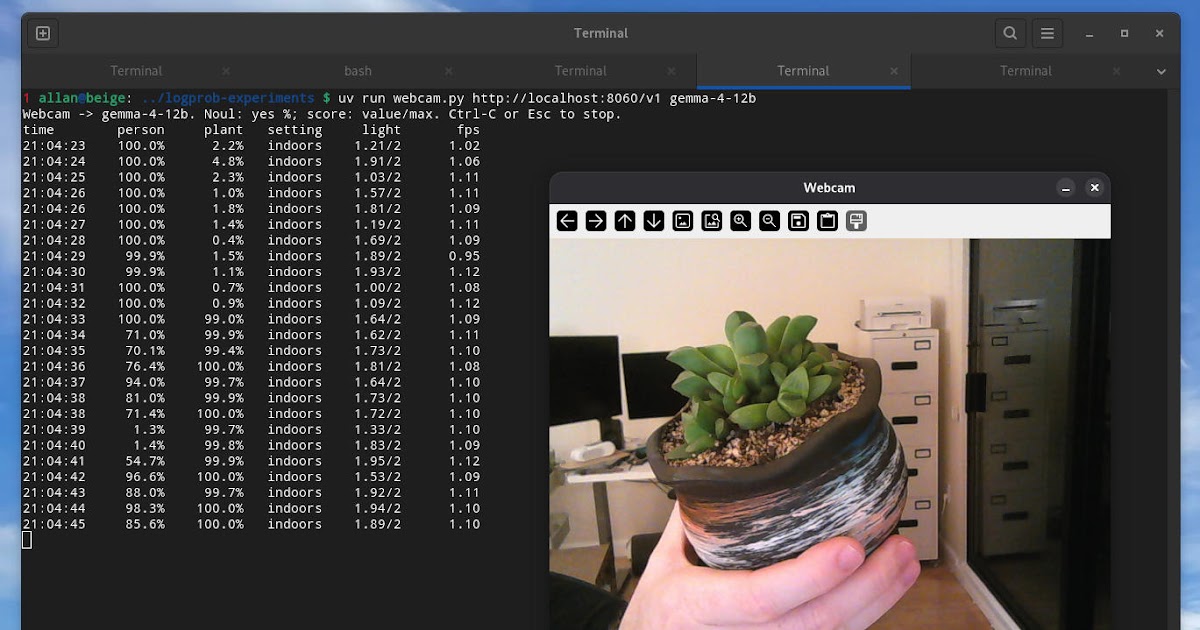
- TeMPOraLNow this is how[0] we get some of the most magical Star Trek technology that eludes us to this day, such as automatic doors. Because if you notice, they work much, much better than real-life ones, because they seem to be doing something like this: if(within 10 meters of door then) { if(Jev( [A] Intends to go through, expects doors to open [B] Approaches with no intent to pass [C] Passing by, loiters, or otherwise [D] Other ) == most definitely A) { // open doors, +/- identity/security/interlocks check } else { // ignore } } Keywords: ambient awareness, understanding of intent.Most interactive tech on Star Trek is like this - from phasers to consoles to communicators to voice interactions with the ship's computer. The computer seems to be aware of the user and surrounding, and actively infers intent from context, to DWIM ("do what I mean") and when they mean it, instead of doing dumb things[1] on simple triggers.--[0] - The direction, not final implementation - surely we can work out how to do it more efficiently than wrapping around final stage of LLM. But the point is, multimodal.[1] - Obviously it's a fictional show, but in this, both Watsonian and Doylist explanations align near-perfectly: this is/portrays advanced technology, that Just Works and doesn't do stupid shit. Same intent recognition algorithm is there - fictionally in the computer, in reality in the minds of on-set technicians.
- prathjeNice! I would love to use it for images as well. Then again is using Grammar-Based Decoding with a json response not the same? Is Jev just that with nice caching? Because then I have been using that already…
- lostmsuMuch less code https://news.ycombinator.com/item?id=49769618
- frabcusPresumably this is much less good than Jev, because the normal LLM models have been trained with RLHF and to be agents. Especially on a large model, I'd expect it to decide in an earlier layer.I'd hope whatever Jev's Reinforcement Learning for Calibrated Decisions (RLCD) does is better at training the models to give accurate probabilities in the weights.
- CROON_tvWhat I'd want to see next to accuracy is tail latency. In a real-time use, deciding when a spoken sentence is finished, a general LLM with the same prompt was slower and more hesitant for us than Jev, even though both cost about the same.
- roger_> Answer with the letter of the best option only [A, B, C]What if it says "D"? What if it tries to say "Additional details needed"?(Also no calibration, etc.)
- czl_myI've created a Jev wrapper so that it can work via any OpenAI-compatible endpoints https://github.com/zhulinchng/jevper
- Mashimo[A] Hotdog[B] Not a hotdog
- arcticbullAh sweet it’s like Jev but several order of magnitude more expensive, and slower too.
- HavocLikely works even better with fireworks ai since they have proper grammar support
- bicsiOf course it works, Jev is nothing but an API breakthrough
- thesuperevil[flagged]
- happybox2016[flagged]
- happybox2016[flagged]
- happybox2016[flagged]
- fr2029[dead]